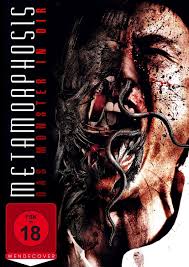
HMMM. That’s kind of the feeling this one leaves you with at best. To be fair, it has had a lot of criticism and some pretty harshly toned reviews, so this intrepid investigator went out to explore for themselves and understand what all the commotion was about.
Henge begins relatively normally. (Normal, this is, in terms of Japanese style horror.) Yoshiaki is living a fairly simple life following the recovery of violent and strange seizures. With his devoted wife Keiko, his plans to return back to normality are soon interrupted as they begin again, this time with a rather odd case of sudden and temporary mutation. This unfolds as bizarre murders are happening in the same town, and yeah, doesn’t take a genius to start adding that up.
While set mostly in the couple’s house at first, slowly the film refreshingly creeps into the open, allowing for a greater visual impression. The lack of sets, low budget makeup/costumes and the tiny cast are achingly tough to get through; Aizawa’s above average performance makes up for somewhat, but you can’t help being left as if more effort and design was arranged into the practical realities of the production.
Although there is the obvious Tetsuo: The Iron Man influence, there are a few interesting aspects here which may possibly have been restructured to metaphorically show how domestic abuse works: the way it slips into the home undetected, develops over weeks and months, always seeming to excuse itself, and eventually swallows a person or a household with its own reproduction in mind. This was certainly my reaction from the actions of Keiko and her interactions with her rapidly mutating husband. Sadly, this isn’t the point of the flick.
There’s a handful of good moments of crazy murder and deranged depravity. So not everything is lost exactly. It’s the wild tangent that Henge takes which damages its watchability – not to mention credibility. By the end the narrative has rearranged itself from an attempt at psychological drama into something like a full-blown monster movie. Though its ambition and experimental nature is commendable, admittedly, this is a hell of a leap, and perhaps a focus on stronger balance between the two influences styles would have worked out more convincingly.
4/10
 Possession Media